Product & Announcements
Xitoring introduces heartbeat monitoring
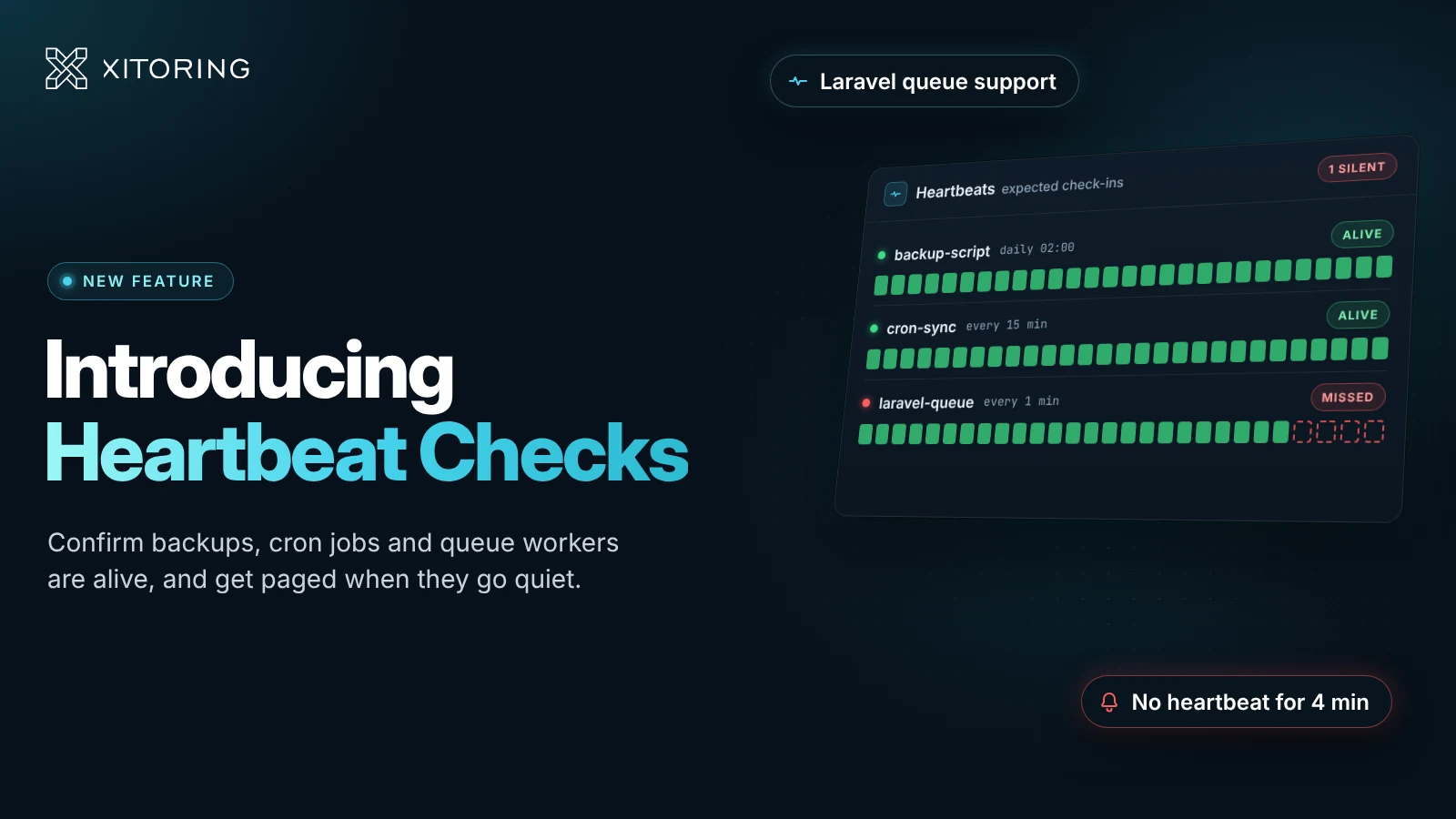
Xitoring's new Heartbeat Check confirms scheduled jobs, cron tasks, and background services are alive — and pages you the moment they stop checking in.
Apr 14, 20232 min read
Insights on monitoring, incident management, and keeping your infrastructure reliable.
Xitoring's new Heartbeat Check confirms scheduled jobs, cron tasks, and background services are alive — and pages you the moment they stop checking in.

Xitoring's Telegram integration delivers real-time incident and uptime alerts straight to your chat, so your team can respond from anywhere in seconds.
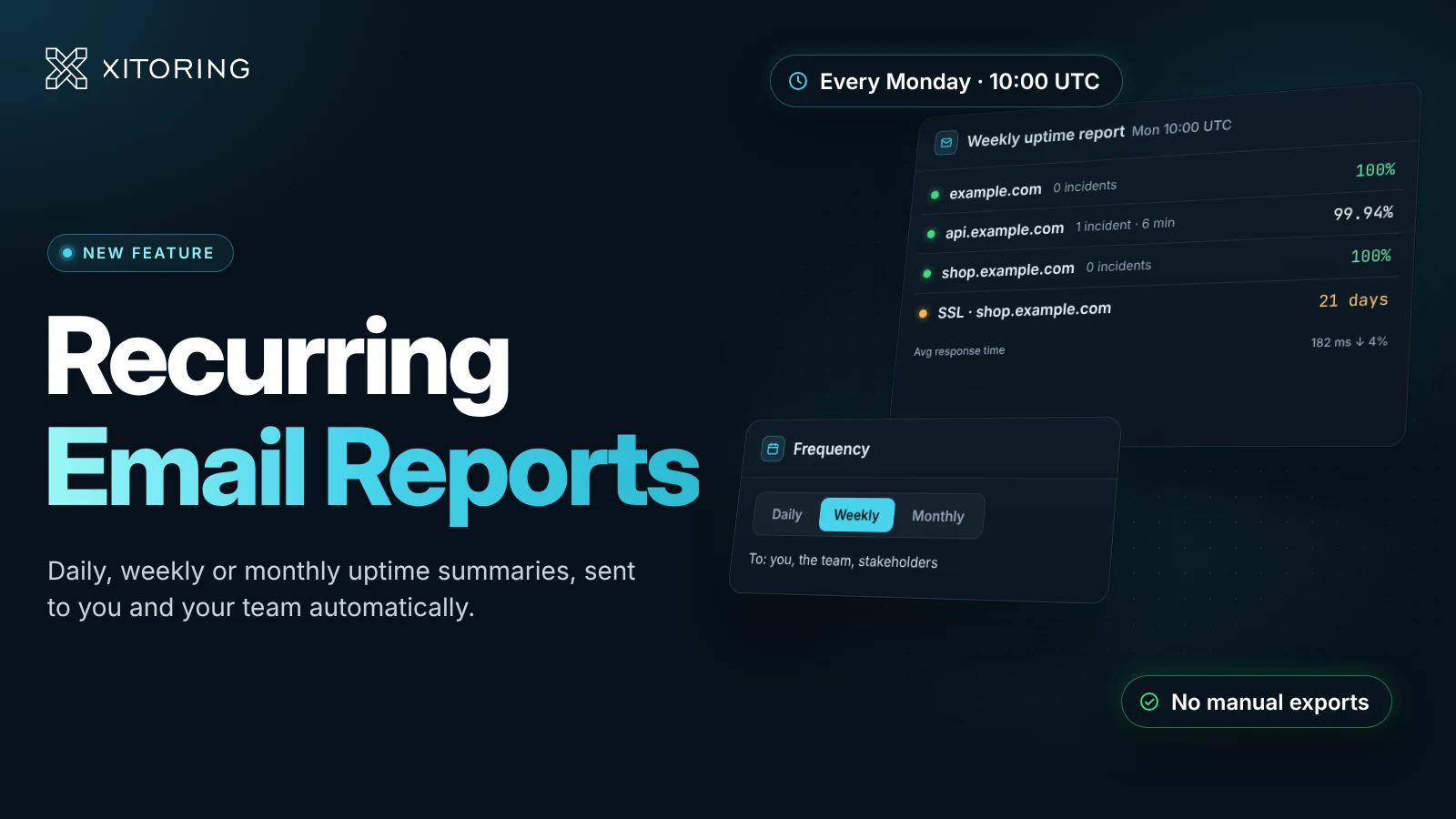
Xitoring's recurring email reports send daily, weekly, or monthly uptime summaries to you and your team automatically — no manual exports needed.
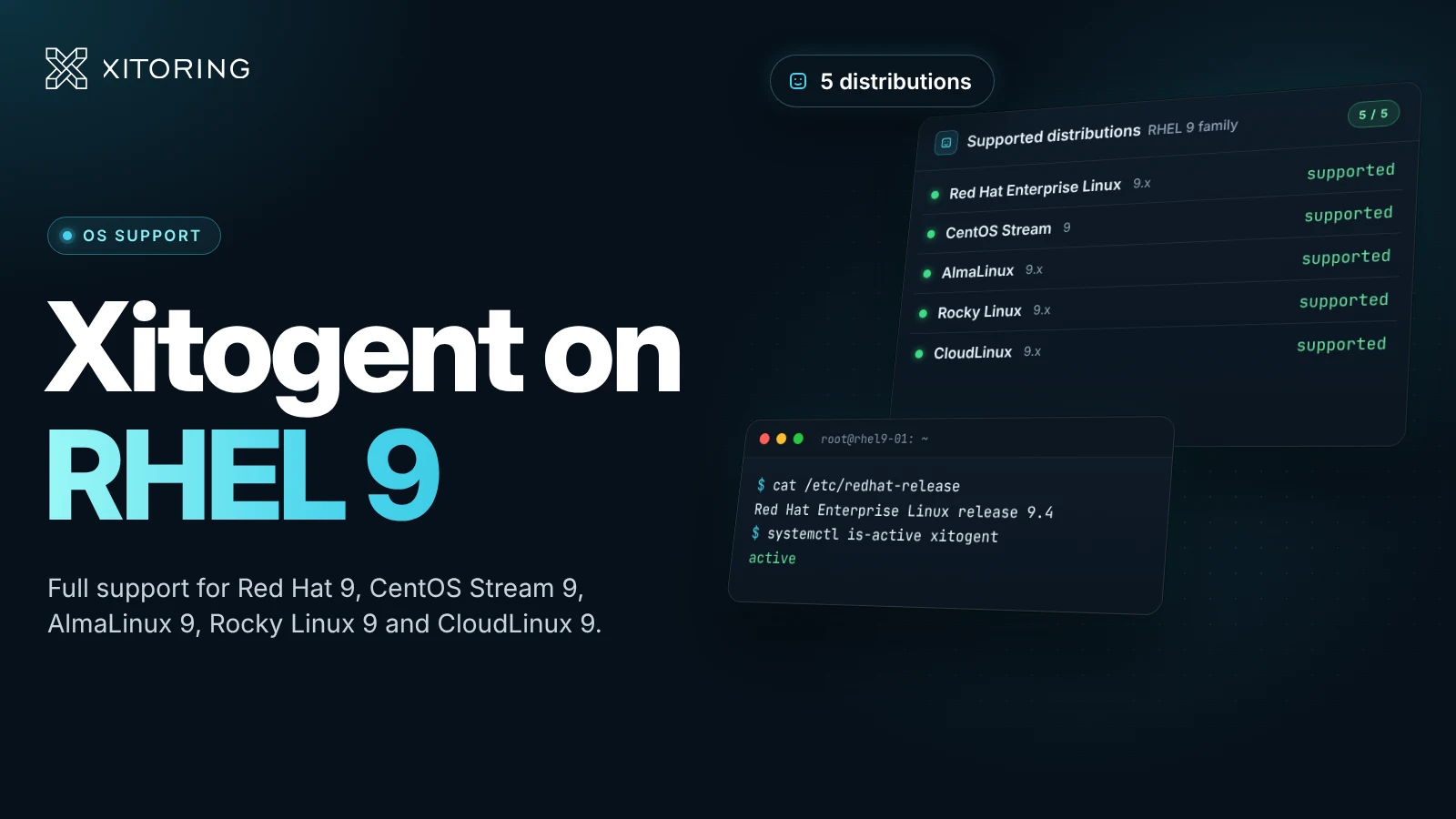
Xitogent is now fully compatible with Red Hat 9, CentOS 9, AlmaLinux 9, Rocky Linux 9, and CloudLinux 9 — free server monitoring for up to five servers.
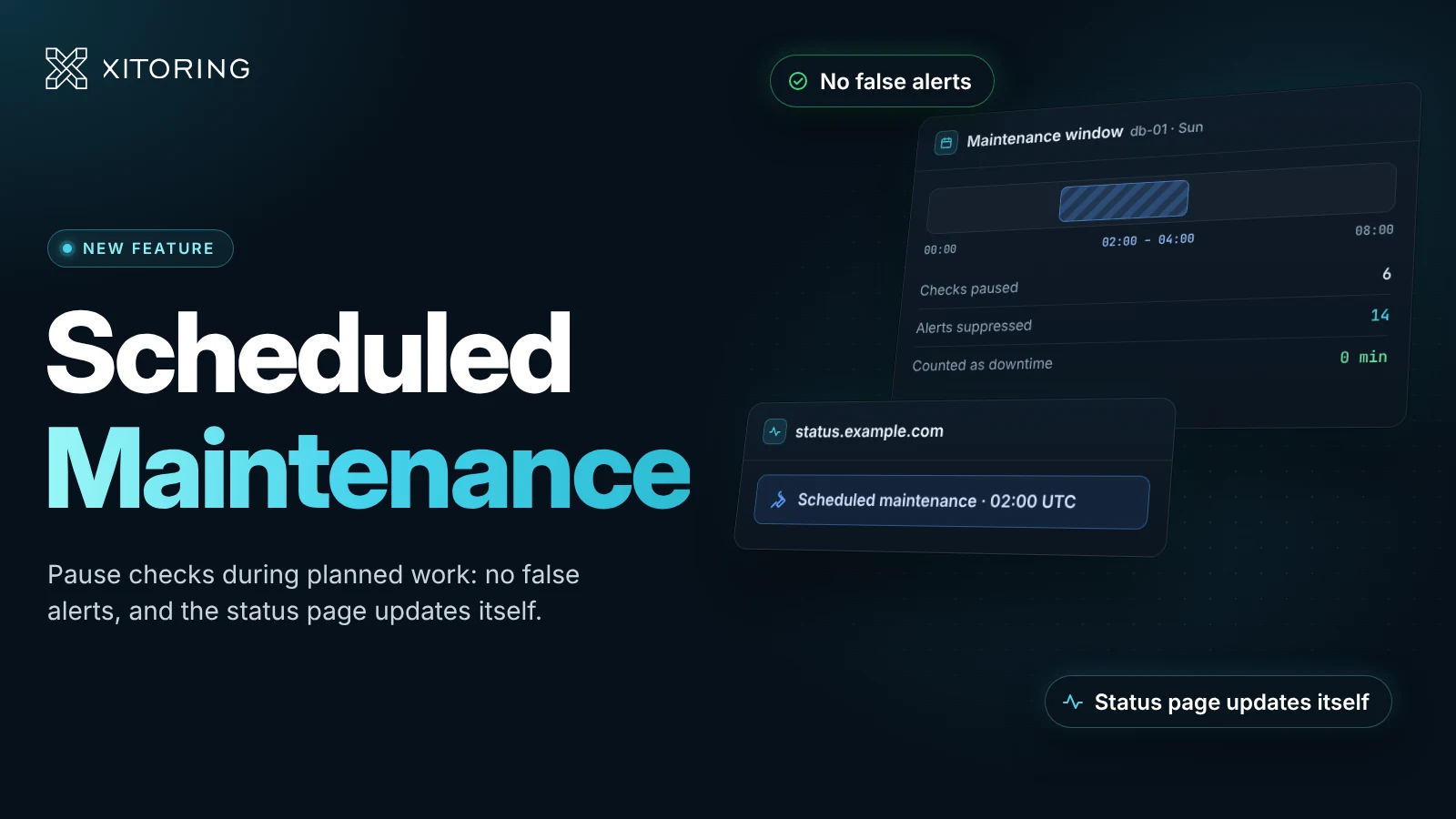
Xitoring's Scheduled Maintenance pauses checks during planned work — no more false-positive alerts, and the status page updates users automatically.
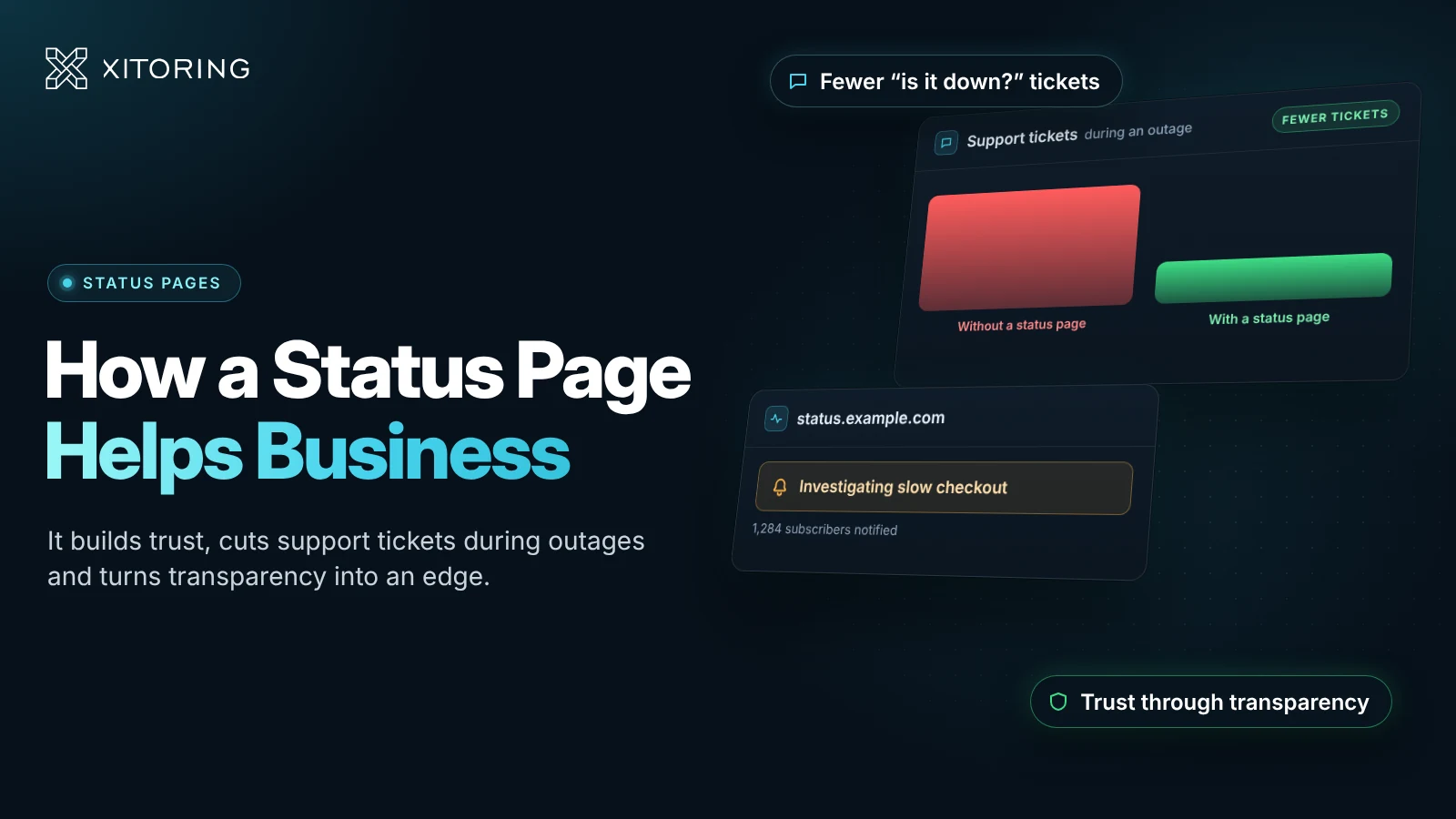
How a public status page helps your business: it builds customer trust, cuts support tickets during outages, and turns transparency into a competitive edge.

Xitoring now offers public status pages — give customers real-time updates on incidents, scheduled maintenance, and overall system health on a branded URL.
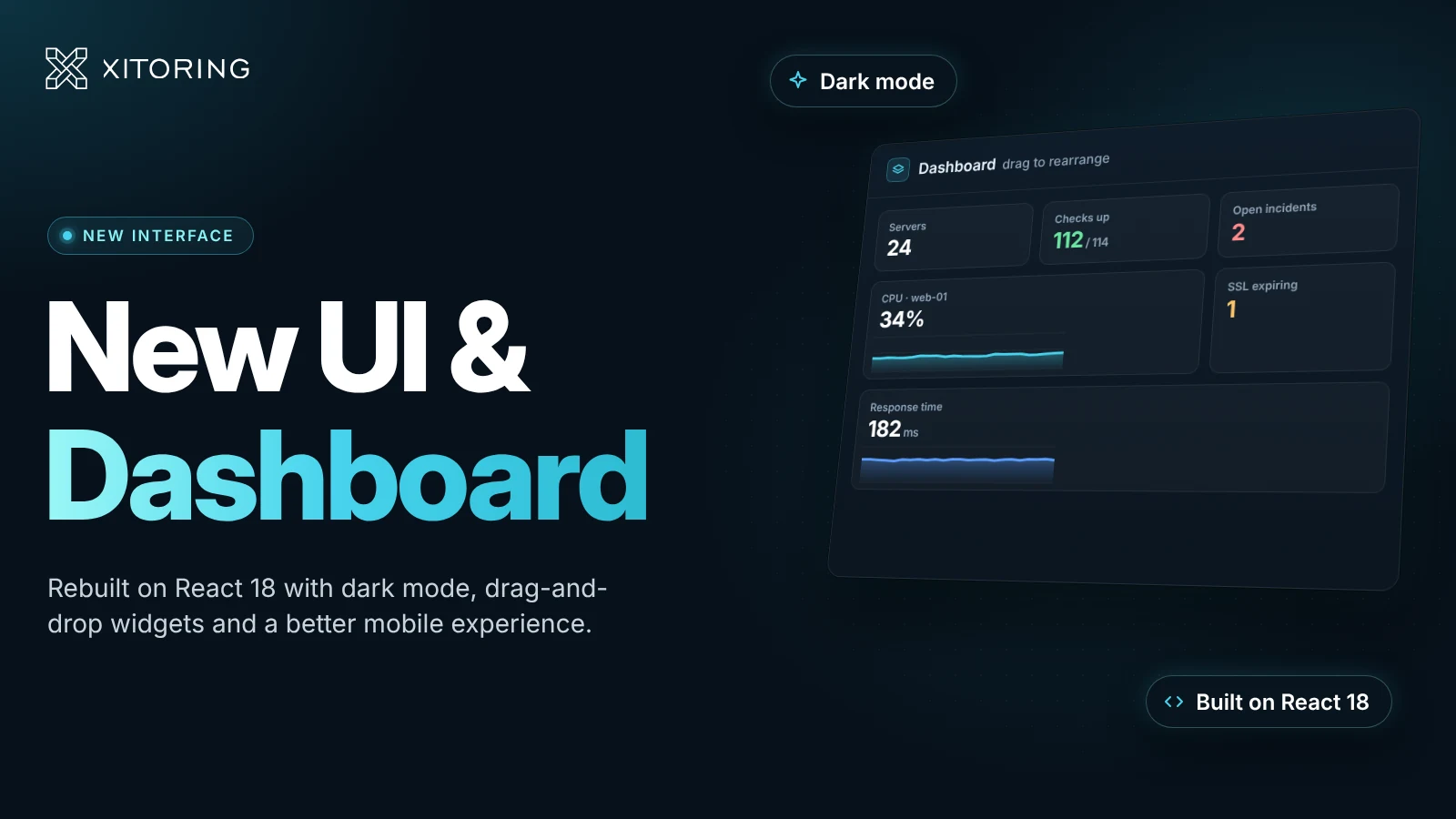
Xitoring's new UI is here: rebuilt on React 18 with dark mode, drag-and-drop dashboard widgets, and a much-improved mobile experience.
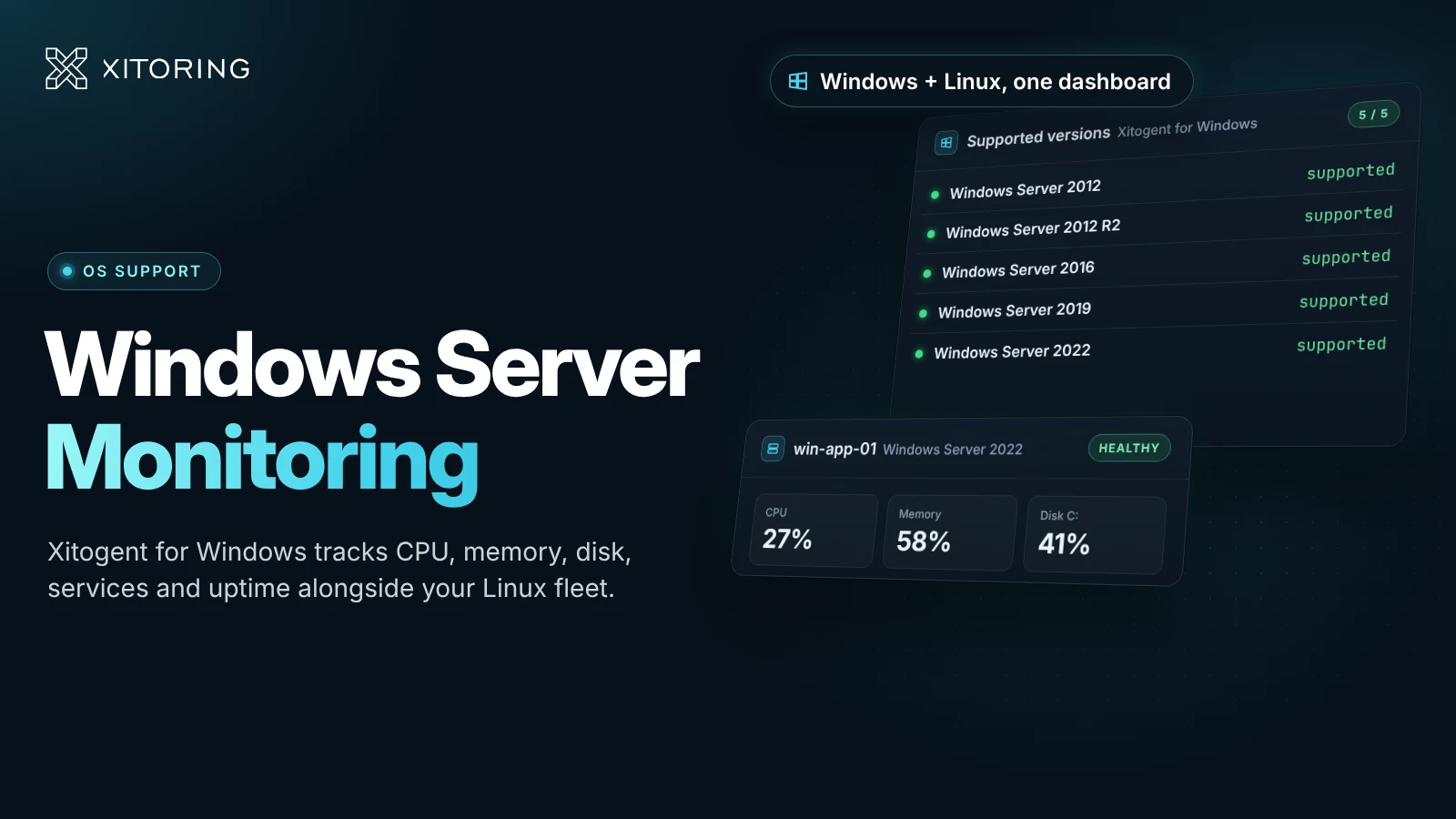
Xitoring now offers full Windows Server monitoring — install Xitogent for Windows to track CPU, memory, disk, services, and uptime alongside your Linux fleet.
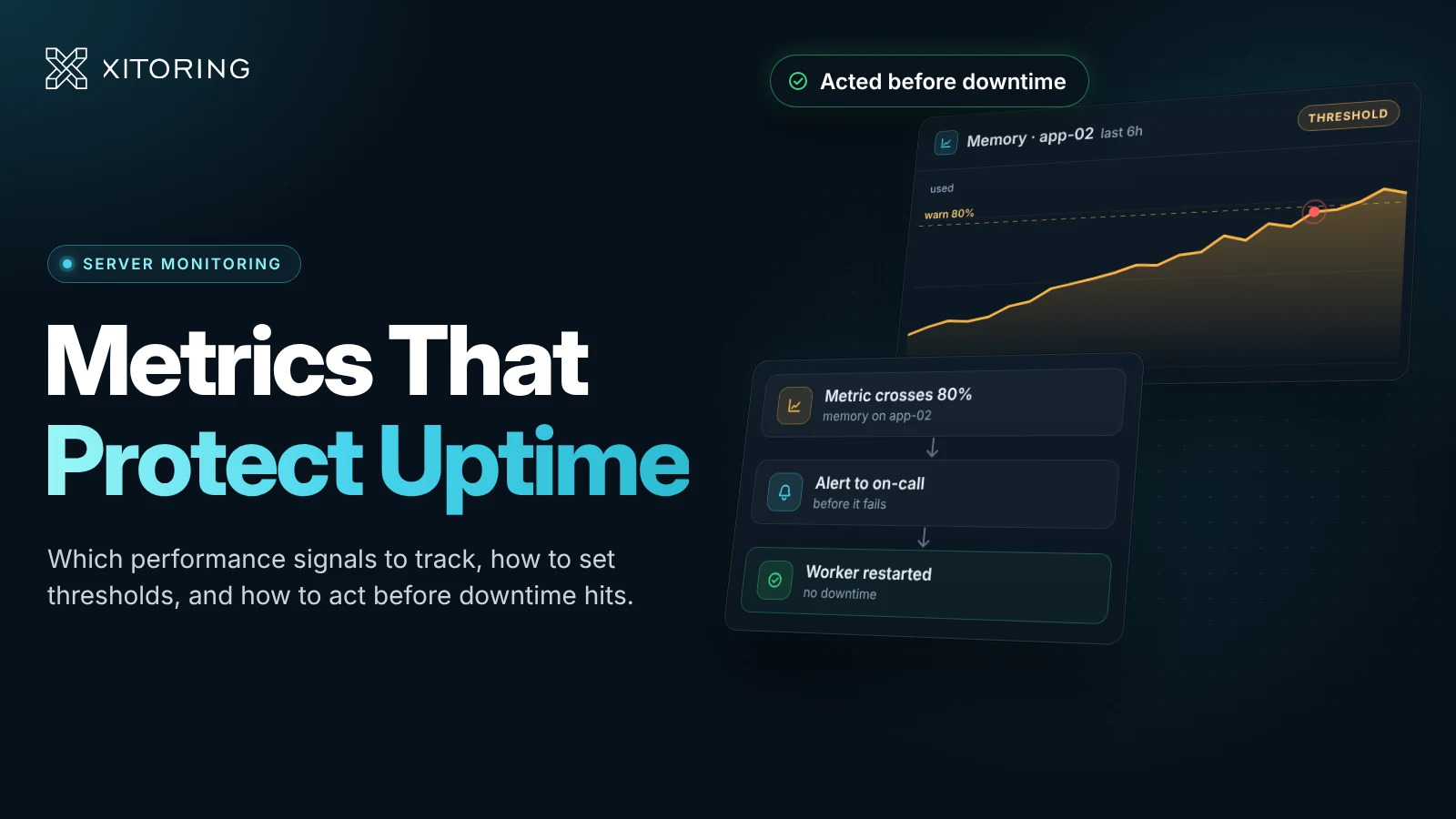
How metric monitoring increases server uptime: which performance signals to track, how to set thresholds, and how to act on data before downtime hits.
Agent-less vs agent-based monitoring compared: how each works, where each wins, and how to pick the right approach for your servers and cloud workloads.
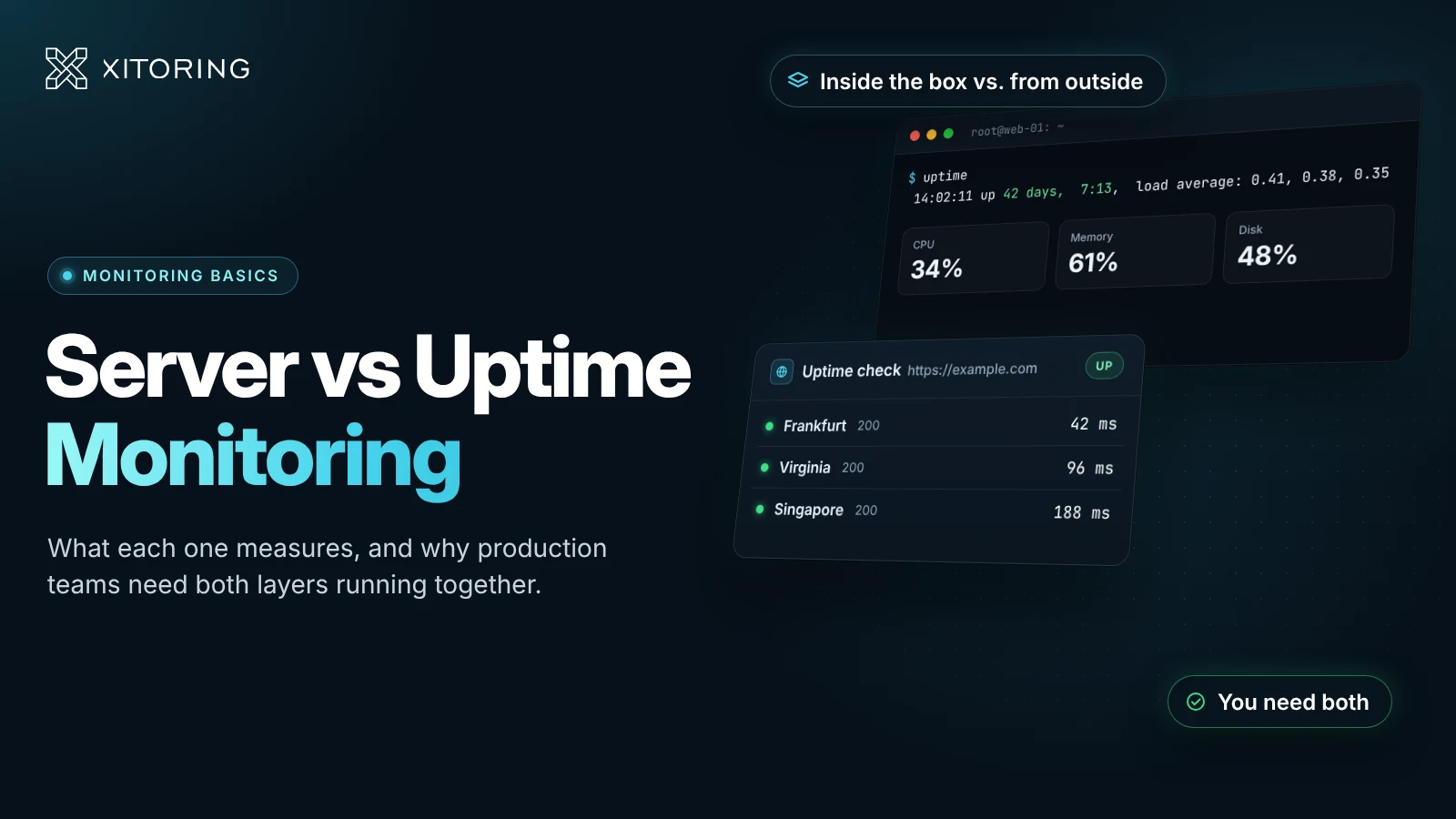
Server monitoring vs uptime monitoring: how each works, what they actually measure, and why most production teams need both layers running together.